


Ultrasound and Echocardiography
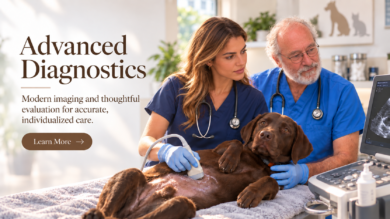 Ultrasound is a safe, minimally invasive diagnostic tool that allows us to evaluate many internal organs and structures without surgery. It can provide valuable information quickly and often helps us diagnose conditions that might otherwise require more invasive procedures.
At Sunnycrest Animal Care Center, we perform ultrasound examinations in-house using our Samsung ultrasound system. All studies are reviewed by a board-certified veterinary internist, giving us the benefit of advanced imaging along with specialist interpretation.
Ultrasound can be especially useful because it provides real-time images of soft tissues and internal organs. Depending on the area being examined, it may allow us to evaluate the liver, gallbladder, spleen, kidneys, urinary bladder, gastrointestinal tract, pancreas, reproductive organs, lymph nodes, and other structures.
At Sunnycrest Animal Care Center, we recommend ultrasound when we have:
- Unexplained abnormal laboratory tests
- Unresolved health issues
- Distended or fluid-filled abdomens
- Enlarged abdominal organs
- Difficult or painful urination
- Blood in the urine or recurrent urinary tract problems
- Suspected bladder or kidney stones
- Chronic vomiting or diarrhea
- Unexplained weight loss, poor appetite, or refusal to eat
- Abdominal discomfort
- Abnormal abdominal masses or changes seen on X-rays
- Suspected liver, gallbladder, kidney, pancreatic, or splenic disease
- Unexplained anemia or suspected internal bleeding
- Fever of unknown origin
- Suspected endocrine or adrenal disease
- Vaginal discharge or other reproductive concerns
- Pregnancy
- Previously identified abdominal disease or masses that need monitoring
- Need for ultrasound guidance for selected needle aspirates or fluid sampling
 An echocardiogram is a specialized ultrasound examination of the heart. Unlike an ECG, which evaluates the heart’s electrical activity, an echocardiogram allows the cardiologist to see the heart beating in real time and evaluate its structure and function.
Echocardiography can provide detailed information about the size of the heart chambers, thickness and movement of the heart walls, function of the heart valves, direction and speed of blood flow, and the heart’s overall pumping ability.
An echocardiogram may be recommended when a pet has a heart murmur, an enlarged heart seen on X-rays, an abnormal ECG, coughing, difficulty breathing, weakness, fainting, exercise intolerance, or other findings suggesting possible heart disease.
For patients who need an echocardiogram, Dr. Fred Brewer, a board-certified veterinary cardiologist, comes to Sunnycrest to perform the examination in our hospital. This allows many of our patients to receive specialist cardiac evaluation in the familiar surroundings of Sunnycrest rather than traveling to a specialty hospital.
Dr. Brewer is a Diplomate of the American College of Veterinary Internal Medicine in Cardiology. He received his veterinary degree from Cornell University and subsequently completed a three-year cardiology residency at Cornell.
What happens during an echocardiogram?
For most patients, an echocardiogram is performed without general anesthesia. A small area of hair may be clipped so the ultrasound probe can make good contact with the skin, and the patient is positioned gently while images of the heart are obtained from several angles.
The examination is usually well tolerated and allows the cardiologist to assess the heart while it is beating in real time. Doppler ultrasound may also be used to measure the direction and speed of blood flow through the heart and major vessels.
Because the study is performed here at Sunnycrest, our doctors can review the cardiologist’s findings and recommendations and continue coordinating your pet’s ongoing care.
After the examination, Dr. Brewer provides his findings and treatment recommendations so that we can discuss the results with you and determine whether any additional testing, medication, or monitoring is appropriate.
When appropriate, ultrasound and echocardiography findings can be considered together with laboratory results, digital X-rays, ECGs, blood pressure measurements, and other diagnostic information to provide a more complete picture of your pet’s condition.
