


Advanced Diagnostics
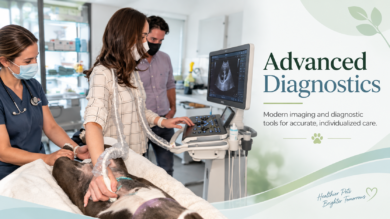
Modern diagnostic tools help us gather more complete information about your pet’s condition so we can make thoughtful treatment decisions as quickly and accurately as possible. Depending on your pet’s needs, this may include ultrasound, echocardiography, electrocardiography, digital radiography, laboratory testing, and other specialized diagnostic procedures. Whenever appropriate, diagnostic images and test results can also be shared electronically with consulting radiologists, internists, cardiologists, and other specialists for additional review. Our goal is to obtain the information we need while keeping your pet as comfortable as possible and avoiding unnecessary testing whenever we can.
Ultrasound and Echocardiography
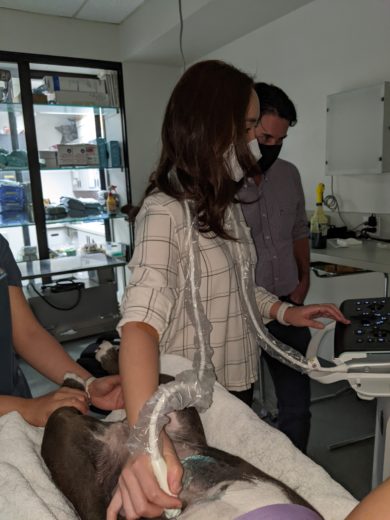
Ultrasound allows us to examine many of the body’s internal organs and other soft-tissue structures without surgery or radiation. It can provide valuable information about the liver, kidneys, bladder, spleen, gastrointestinal tract, pancreas and reproductive organs, and may help identify masses, abnormal fluid or changes in organ structure.
Echocardiography is a specialized ultrasound examination of the heart. It allows us to evaluate the heart’s chambers, walls, valves and pumping function. Sunnycrest performs these examinations using our Samsung ultrasound system, and the studies are reviewed by a board-certified veterinary internist.
Electrocardiography (ECG)
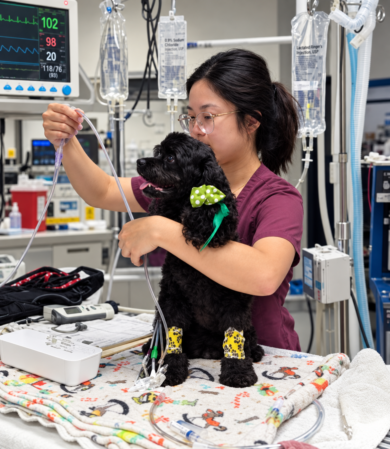
An electrocardiogram records the heart’s electrical activity. It can help identify an abnormally fast, slow or irregular heartbeat and provide information that cannot be obtained by listening to the heart alone. An ECG may be recommended when a pet has a heart murmur, weakness, fainting, breathing difficulty or an irregular rhythm detected during an examination.
ECG findings can be evaluated along with X-rays, blood pressure measurements, laboratory testing and echocardiography to develop a more complete assessment of your pet’s heart. When additional expertise is needed, we can arrange consultation with or referral to an appropriate veterinary specialist.
Digital Radiography (X-rays)
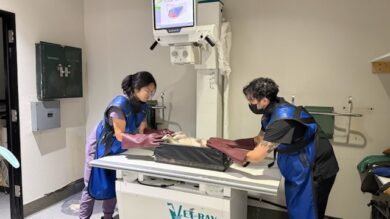
Digital radiography provides detailed images of the bones, chest, abdomen and other areas of the body. X-rays may help us evaluate fractures, arthritis, heart and lung conditions, bladder stones, intestinal obstructions and many other medical problems. Because the images are available immediately, our veterinarians can examine and enlarge them without waiting for film to be developed.
Digital images can also be shared electronically with consulting radiologists and other specialists when an additional interpretation is helpful. This allows us to obtain expert input promptly while keeping your pet’s diagnostic information available as part of the medical record.
Laboratory and Molecular Testing
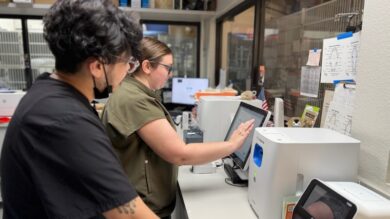
Our in-house laboratory and IDEXX reference laboratory services help us diagnose disease, monitor treatment and medications, and evaluate your pet’s overall health. Depending on your pet’s needs, testing may include complete blood counts, blood chemistry profiles, electrolyte measurements, urinalysis, fecal examinations, endocrine testing and screening for infectious diseases. Many commonly needed tests can be performed in-house, allowing our veterinarians to receive important results quickly and begin treatment without unnecessary delay.
For more specialized testing, samples can be submitted to IDEXX reference laboratories. Molecular testing, including polymerase chain reaction (PCR), can detect genetic material from certain infectious organisms and help diagnose a wide range of viral, bacterial, fungal and parasitic diseases. These tests can be especially valuable when an organism is difficult to identify through routine laboratory methods.
Laboratory results are interpreted together with your pet’s history, physical examination and other diagnostic findings. Testing may also be used to establish a healthy baseline, detect changes before symptoms become obvious, monitor chronic conditions and determine how well a pet is responding to treatment.
Please select one of the diagnostic services from the menu for more information.