


Digital Radiographs (X-rays)
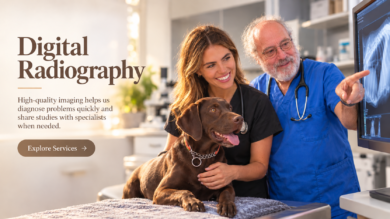 Sunnycrest Animal Care Center uses digital radiography to obtain high-quality X-ray images quickly and efficiently. Unlike traditional film-based systems, digital images are available almost immediately and can be adjusted for brightness, contrast, and detail to help our doctors evaluate important findings more clearly.
What X-rays can help us evaluate?
Digital X-rays are useful for examining many areas of the body, including the chest, abdomen, bones, joints, and spine. They may help identify:
- Fractures and other bone injuries
- Arthritis and joint disease
- Heart and lung abnormalities
- Urinary stones
- Some swallowed foreign objects
- Changes in the size or shape of abdominal organs
- Spinal and orthopedic abnormalities
- Certain masses or other abnormal structures
X-rays may be recommended when a pet is coughing, having difficulty breathing, limping, experiencing trauma, vomiting, showing abdominal discomfort, or when the physical examination or laboratory results suggest that imaging would be helpful.
Advantages of digital radiography
Because digital images are available almost immediately, our doctors can review them without waiting for film processing. Images can also be enlarged and adjusted electronically, allowing areas of interest to be examined in greater detail.
Digital technology also makes it easy to share images electronically with other veterinarians. When additional interpretation is helpful, we can send your pet’s radiographs to a consulting veterinary radiologist or another board-certified specialist for review.
Positioning and sedation
Good positioning is important for obtaining diagnostic-quality X-rays. Many pets can be positioned comfortably without sedation, but mild sedation may occasionally be recommended if a pet is painful, anxious, unable to remain still, or if precise positioning is required. Our goal is to obtain the needed images while keeping the patient as comfortable and stress-free as possible.
X-rays and other diagnostic imaging
Radiographs provide excellent information about bones and many areas of the chest and abdomen, but no single imaging method is ideal for every problem. Some soft-tissue structures are evaluated more effectively with ultrasound, and certain conditions may require additional laboratory testing or more specialized imaging.
By combining the physical examination with X-rays and other diagnostic tests when appropriate, we can develop a more complete picture of your pet’s condition and make more informed treatment recommendations.
Copies of your pet’s radiographs can be provided electronically upon request.
